Showing posts with label Cannonball Read Motherfuckers YEEEEEAH. Show all posts

Monday, July 26, 2010

Cannonball Read Entry #33: Stuff White People Like - Christian Lander


You hear that sound? The dull thumping noise? That's the sound of Christian Lander beating a dead horse. And now with the publication of Stuff White People Like, based on the blog of the same name, you can hold it high on your bookshelf where people will see it, chuckle a little bit, then move on.

For those of you still stuck under a rock, Stuff White People Like is one of those One-Trick Pony sites that popped up where, the authour pretty much tells the same joke every day and everyone eats it up. Sure, the joke is funny when you first hear it, but after a while the punch-line just gets drowned out by the sound of the "thump-thump-thumping" that can only come from the union of bat with deceased horse.

We get it; hipsters are insufferable. Everyone knows that. It is literally impossible to be in the same room as a hipster-douchebag with wanting to kick them square in the fleshy patch of skin where their genitals should be. Because really, that's what this book is about: Hipsters. Unfortunately, no one would buy a book about things hipsters liked, because no one cares about what hipsters think anyway.

I guess what I'm trying to say is this: read one entry of "Stuff White People Like". Laugh about it. Then close the browser and never read the site again. Believe me, you'll thank me later.

Cannonball Read Entry #32: South Park and Philosophy - Richard Hanley

You know, I learned something today; There are two types of South Park fans in the world. The first are people who watch the show and actually understand the message of the week's episode. The other group consists of those who watch the show and merely impose their own tightly-held belief onto it.

Guess which group Richard Hanley, the mind behind South Park and Philosophy: Bigger, Longer and More Penetrating, belongs too?

That's not entirely fair; as a professor of philosophy, Hanley has interesting ideas, and while they're not always entirely right, they're never entirely wrong. It's just that, well, the dude is just so fucking smug about them. So smug that he ends up suffering the same fate as San Francisco does in "Smug Alert", disappearing up his own ass.

If we're using the "Dicks, Pussies and Assholes" dichotomy from Team America: World Police, Hanley is an asshole that likes to think he's a dick. While he likes to think that he's fucking the system good and hard, all he's really doing is shitting on everything. He shits on religion, he shits on banning steroids, he shits on anyone who doesn't agree with him ... After a while, you just want to grab his smarmy little mouth and seal it shut.

Not to say the book is completely full of it; the essays NOT by Hanley are well worth the price of admission. Not only because they aren't completely up their own ass, but also because they actually examine the characters, ideas and philosophy behind the show, unlike Hanley who just says "This is what I believe" and then picks a bunch of clips from the show to prove his point. Honestly, I'd much rather read about how each of the boys represents a function of the human psyche then suffer through some tripe about how Richard Dawkins will save us all from the religious zealots.

In the end, about 1/3 of the book isn't written by Hanley, and this is the part of the book that I most enjoyed reading. It's one thing to have ideas, but if you're only going to use them as an excuse to shit on other people's ideas, then you're really just an asshole ... Or at best, a limp dick.

Thursday, July 8, 2010

Cannonball Read Entry #31: I Know I Am, But What Are You? - Samantha Bee


Samantha Bee has long been my favourite Daily Show Correspondent, and no, it has nothing to do with the fact that she has boobies, Jezebel. So please, by all means, please take your cries of "Misogyny!" and shove them up your ass. Oh, wait, was that a sexist thing to say? My bad.

Anyway, baseless claims of women-hating aside, Samantha Bee has always been one of the Daily Show's strongest assets. Why? Simple: She never let herself get bigger than the joke she was delivering (with perfect comedic timing, I may add). Some may say this is the reason why she's never really had any major roles while Colbert, Carrell et al. have moved onto the screen, but quite frankly, I appreciate a comic who takes a backseat to their material.

Thankfully, I Know I Am is Bee's way of finally unleashing her personal life onto the general public in a series of short stories from her life, much in the vain of Chelsea Handler. Admittedly, it takes a little while for the book to really get going. Sadly, a lot of Samantha Bee's early life is nowhere near as funny as her adult years. For those of you who read the book and wonder why you aren't laughing right out of the gate...well, hold on. It gets better, I swear. Honestly, the bit about her performing in a Sailor Moon show while Jason Jones yells at little kids about Cancer and anuses had me doing that thing where you chuckle for about five straight minutes afterwards.

Anyway, choppy beginning aside, Samantha Bee herself is a good enough reason to buy the book.

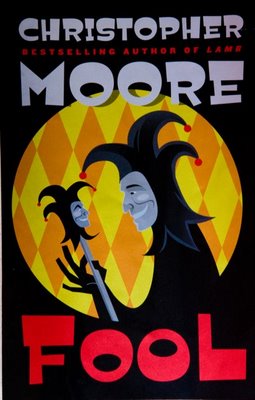
Cannonball Read #30: Fool - Christopher Moore


Christopher Moore is his own worst enemy. And considering the man is my favourite authour and that his work easily take up a rather large portion of my Top 10 books, that's saying something. I'll go into this in a bit, but let's start with the obligatory plot synopsis and things I liked, shall we?

Fool is set entirely in the universe of Shakespeare's King Lear. Hey, it works for Tim Burton, doesn't it? Anyway, the story is told by the titular Fool, Pocket, a tiny little guy tasked with cheering up Lear's youngest daughter Cordelia. The plot is set into motion when Lear decides to divvy up the land based on how well his daughters can stroke his ego. Lear's first two daughters, Goneril and Regan, bullshit him to within an inch of his life and are rewarded with huge swaths of kingdom (don't spend it all in one place!) Cordelia, on the other hand, tells her father she loves him but refuses to stroke his ego, and is justly given das boot. Lear, now fully enraged, dumps his closes friend, gives away Pocket's best friend Drool and generally goes about creating a huge clusterfuck which Pocket now has to clean up.

From the perspective of actual writing, this is easily one of Moore's tightest narratives. Unlike a few of his other books, each scene has at least some impact on the plot altogether, rather than feeling like a clever little aside. He even manages to incorporate Shakespeare's lingo in a way that feels natural without turning the book into either outright mockery or a strict wall of impenetrable text.

The downside is that his characterization, if I may say, fucking awful. Christopher Moore has a bit of a habit of sticking himself into his stories the same way a toddler might force two puzzle pieces together with a hammer and sheer determination. Sometimes, this works (see: A Dirty Job), but usually the protagonist ends up being a lame dork who for some reason walks around knee-deep in A-class poon, thus making them aggravating AND wholly unbelievable.

And that's what Pocket is: An irritating little man who somehow manages to bang chicks and my God does he ever bang a lot of chicks. And just in case you're worried these women have anything resembling a personality, surprise! They don't! The women in the story essentially hang around as a place for the men in the story to put their penises. Hell, even Lear's daughters are essentially characterized by their sexual fetishes. There are about two women in the entire story who have anything close to resembling an actual personality, and even they barely do anything more than play around with his libido. Christ, you'd think with all the flack Jezebel is giving The Daily Show for hiring Olivia Munn, they might maybe lob a couple rocks over at Moore.

It hurts me to say this, but despite a tight narrative, Fool may be one of Moore's weaker books, based solely on just how dreadfully bad he writes his characters. Come on Chris; try writing about someone other then yourself for a change here.

Monday, June 28, 2010

Cannonball Read Entry #29: Candy Girl - Diablo Cody


Back in 2007, a little movie called "Juno" came out to adoration of indie movie lovers everywhere. It was a well-written coming of age tale about a girl who grows up amidst an unplanned pregnancy and learns that yes Virginia, there is a Great Love. Hell, even Dan Carlson titled his review of it "I Didn’t Think I’d Find You Perfect In So Many Ways". Hell, if that's not a sparkling recommendation, I don't know what is.

But then Juno made the ultimate mistake in indie cinema: it became successful. The success of Juno was like blood in the water for prentious hipster snobs everywhere, who descended upon the movie and all those involved of the white-hot wrath that can only be fueled by Caffeine-Free Skinny Chai Tea Lattes, ironic facial hair and Apple products. Diablo Cody was a sell-out, the character of Juno was unrealistic, and the dialogue was "too quirky". What they didn't seem to realize was that Cody was simply good at her job, Juno's non-adherence to the traditional teenage model was what made her reliable in the first place, and that most people will never in their lives pen anything nearly as flawless as Juno.

In many ways, Cody's memoir, Candy Girl, confirms all of this. A veteran of north-western titty-emporiums, Cody's book goes into detail about her various stints as a stripper among the strip clubs in a small, white bread town. This is offset by her burgeoning romance with her eventual husband Johnny and her relationship with his daughter.

I'm sure this must come as a shock to you, but I found the entire thing to be absolutely brilliant. No lying here: Candy Girl was what inspired me to originally step into the world sex-for-cash. Say what you will, but in my mind Diablo was living breathing proof that someone could proudly wear the badge of a sex-worker and be accepted by mainstream society. Hell, they gave her an Oscar. A fucking Oscar dude.

For those concerned with whether or not Cody's uniquely floral speech pattern, well you better believe it's on, homeskillet. But much like Juno's preggo eggos, the cutesy quirks are meant to move the story along and establish her voice and personality, rather than a useless device meant to be clever for clever's sake.

Furthermore, the way she portrays her gig is never derogatory or judgmental; the way she sees it, it's just another job. Mind you, one with more money and less clothes, but a job nonetheless. Her departure from the game has nothing to do with a descent into drugs/booze/sex, but rather, a simple realization that she's just done with it. It's not for her anymore, so she's moving on.

If you're going to write off Juno or Candy Girl for anything, you're going to have to do a lot better than saying it's unrealistic. Or quirky. Or cutesy. Because guess what? All the best stories are.

Thursday, June 17, 2010

Cannonball Read Entry #28: Dharma Punx - Noah Levine


I'm not a fan of organized religion, and God only knows I've never tried to pretend that I am. Sure I believe in the existence of a higher power that I refer to as God for the sake of simplicity, but I just think that the term itself, "Organized religion", is at best an oxymoron. I have yet to meet any two people that have exactly the same religious beliefs and share the exact same ideas. Organizing them seems arbitrary at best and completely impossible at worst.

But I can also acknowledge the fact that for some people, organized religion gives them a purpose, and let's face it: a life without purpose is wasted. The magnitude of that purpose is neither here nor there; it's the fact that you have a purpose, something to live for, that matters.

Such is the case with Noah Levine's Dharma Punx, a book that chronicles his journey from a drugged-out, self-destructive punk rocker to a Bhuddist teacher. Admittedly, the concept of the memoir wherein our hero turns his life around with the help of religion is a bit played out, but that's a discussion for another time.

Noah is the product of a broken home, an abusive stepdad, and various other trappings of white suburbia. And like most kids, he turns to punk rock and self-destruction as a means of rebellion. Fast forward a couple of years and Noah is a homeless drug-addict stuck in a padded cell to keep him from going Gallagher on his cranium.

Thankfully, in comes Bhudda to provide a moral compass to the wayward Noah. For those of you expecting a half-assed religious conversion were Noah slaps the "Bhuddist" tag on himself and calls it a day will probably be surprised with how in depth he actually goes with it. He travels abroad, sees the Dalai Lama, begins an experiment where he lives as if he only has one year left...You get the point.

This may be the strangest distinction I've ever made when it comes to literature, but bear with me: From the perspective of Noah Levine as the human, it's an extraordinary tale. I'm not going to try and take away from his triumphs and accomplishments, especially when you consider how quickly he managed to turn that ship around. However, from the perspective of his story as a book, his writing doesn't feel strong enough to properly convey his story. At times, moments of beauty feel just overly-sentimental, while at others it barely separates his story from the countless other stories on the bookshelf. Yes, his story is inspirational and truly remarkable, but so is everyone else's on that bookshelf. Everyone overcomes adversity in their lives in order to become a better person; all I'm saying is, if you're going to capitalize off of it by writing a book, you have to make sure you're writing makes it stick out from the pack.

Ultimately, that's the problem: It's a great story, and I'm very happy for his accomplishments, but at the same time...Well, everyone has a story. You just have to be able to tell it well.

Tuesday, May 25, 2010

Cannonball Read Entries #25-27: The Threesome

Since I ended up knocking out three books while I was sick and without an internet connection, I'm going to go ahead and cram reviews for three separate books into one post, else I end up clogging your RS Feed. Is it cheating? Maybe a little, but your Google reader will thank me.

Cannonball Read Entry #25: Things I've Learned From Women Who've Dumped Me - Ben Karlin
Admittedly, it's a tiny bit unfair for me to try and review this one, especially when you consider that I have never dated a woman, nor do I ever plan on being one. Essentially, the power of the vagina, a key motivator in the book, holds absolutely no sway over me whatsoever. Now, if we were to whip out some dicks...

But I digress. Compiled by Ben Karlin, Dumped is a collection of life lessons that have come from being kicked to the curb by those of the fairer sex. Some are important, some are essentially throw away little moments, and some involve cumming on a cat.

Really.

Anyway, since there are a shitload of short stories in here, I'm just gonna go through the table of contents and see what I can remember from reading this while on morphine:
  • Andy Richter: To be honest, I kinda wrote off Andy Richter for a long time, although recently I've come to appreciate him on the sole virtue that OH MY GOD! He's really funny! Even if he did star in "Quintuplets". But whatever, his story about being fattened up by his family so that he would stay with them forever made me laugh.
  • Stephen Colbert: Despite being the top-billed star, his story is...Well, it's disappointing. The joke of the story is that he let his wife black out bits she didn't approve of, and most of it ends up being blacked out. *Rim Shot* This is one of those jokes that works better in theory than execution.
  • Larry Wilmore: Proves what I suspected from his book: Namely, that he works better in short bursts of energy, instead of spreading a joke waaaaaaaaay too far.
  • Rodney Rothman: Has the longest story of the bunch (clocking in at 25 pages when most last only about five pages) despite being the least recognizable. I wouldn't mind this as much if his "sweet good guy routine looking back on loves lost" routine didn't wear it's welcome out about half-way through.
  • Tom McCarthy: I'm not sure who he is, but ultimately, this was one of the sweeter and more heartbreaking of the stories. Sweet, endearing and endlessly charming.
  • Dan Savage: Yup, he's in here too, despite being a card-carrying homosexual (Yeah, there's a card for it now.) Not surprisingly, it's the dirtiest story out of all of them, but whatever, I liked it.
  • Alex Gregory: This one irritated me a bit. For fuck's sake man, I know you're a cartoonist for the New Yorker, but even the guy from OK GO took the time to pump out a story. This is a fucking short story book. There is no reason you get to shit out a clever little drawing and call it a day.
  • Patton Oswalt: I've decided that Patton Oswalt is Jesus. This is the only story out of the entire book that made me physically laugh out loud.
All in all, a pretty good book. There are plenty of other stories, but they're all just sort of okay. Nothing great, nothing terrible. Just okay.

Cannonball Read Entry #26: My Horizontal Life - Chelsea Handler
I am fully aware that it makes absolutely no sense to read Chelsea Handler's first book last for the CBR. Why did I do it? Well, it's simple: I have no sense of planning.

Oddly enough, despite being her first book, "My Horizontal Life" is actually her best book. While it's another memoir compromised of short stories, this one focuses exclusively on her one night stands and the various lessons she learned from them.

Starting to notice a pattern here?

Granted, her later books are both better in at least the comedic sense, but the thing about "My Horizontal Life" is that it has a purpose and a message: The stories are are all still loaded with booze, sex, and a complete lack of dignity, but they're at least focused on the overall message of the story.

If we're going to compare "My Horizontal Life" to Handler's other books, it's not as funny as her later work, but it's definitely a tighter, more focused package.

Cannonball Read Entry #27: My Blind Date Went Blind! (...And Other True Stories Of Dates Gone Wrong) - Virginia Vitzthum
Yes, shut up, another book of short stories where people learn life lessons from amusing anecdotes. I was in the hospital for fuck's sake! My gay uncles bought it for me and they are awesome.

But yes, it's another collection of stories, this time about bad blind dates (something I'm not exactly unfamiliar with). For the most part, they're really not that bad, and only a small percentage of them are outright cringe-inducing. Not that I'm trying to be petty here, but when you're touting a story about a blind date featuring temporary blindness and most of the dates only feature jerks and assholes who don't understand the difference between "Being honest" and "Being a douchebag", I just feel a bit ripped off here.

There are stories about blind dates that, despite going wrong, actually end in happily ever, and along with providing an emotional backbone, these are actually the far more interesting story then the ones about "Oh, he said he wasn't attracted to me then drove off!" If you filled the entire book with stories like these, it would've probably been much better, but sadly, we settle for just being okay.

But honestly, it's a nice little throwaway book; It's nothing really all that serious, just something meant to be picked up on the fly, read for a couple pages, then put down. Something for, say, when you're stuck in the hospital and you keep getting knocked out by gravol.

Friday, May 7, 2010

Cannonball Read Entry #24: The Bedwetter: Stories of Courage, Redemption and Pee - Sarah Silverman


I honestly can't remember where I first saw Sarah Silverman. The furthest back I can think of is "The Aristocrats", which featured Sarah Silverman telling the funniest, most offensive joke in a movie that was about funny, offensive jokes. And if anything, she did it with the fewest amount of words possible.


Let me preface this by saying that rape isn't funny, and it's not a joke. If anything, it wasn't so much the fact that the joke was about rape, it was how the joke was told: The awkward silences, the deadpan expression, the slow realization with which she reaches the punchline...Any idiot can tell a rape joke. A comedian knows how to make it funny without denegrating those who've been hurt by the subject. It's a thin line, but few people can walk it the way Silverman can.

The reason why Sarah Silverman's routine, as well as her autobiography, "The Bedwetter", works as well as it does is because she knows what it's like to feel and be powerless. Her jokes aren't meant to mock those who can't stand up for themselves, but rather, to attack those who have the power, and abuse it. She's a comedic Robin Hood: She takes from the rich and gives to the poor.

For those expecting the sort of fearless, confident stories you might find in Chelsea Handler's work...Not here. If anything, it actually adds more to Silverman's narrative. She's not afraid to show her weakness and her insecurities, and it adds a layer of emotional honesty to the proceedings that I always felt was missing in Handler's memoires.

If you liked Chelsea Handler's books, you'll love Silverman's. It has all the humour and candor of Handler, but it has the one thing she never bothered trying to show: humanity. She's nowhere near perfect, but let's face it, perfection is overrated anyway.

Cannonball Read Entry #23: America (The Book): A Citizen's Guide To Democracy Inaction - Jon Stewart & The Daily Show Writers


I think we can all agree that 2004 was...Well, it wasn't a great year. We elected a president who was functionally illiterate, we were stuck in a poorly-planned war, and Courtney Love had just unleashed "America's Sweetheart" on the general public.

All in all, it could have gone better, really.

Such is the problem with Jon Stewart (And The Daily Show Writers)'s "America: The Book": It's throwback to an era that, quite frankly, is still just a little too fresh in our minds for us to look back fondly on.

The good news is, with the amount of corruption in the American political system at the time, 2004 was the year where "The Daily Show" really began to hit it's stride, and it shows: "America: The Book" is hysterically funny; it's really not a stretch to call it the standard for modern satire and social commentary.

The format is meant to resemble one of those crappy little school text-books you've no doubt been subjected to, down to the end of chapter question sections and the student registration section on the inside of the cover of the book. Each chapter is dedicated to a different aspect of the American political system, and for a book that's meant to be little more than a spoof, it's oddly informative. You can call "The Daily Show" many things, but you can never accuse it of talking down to its audience.

The only problem with the book is that, well, it's just really dated at this point. While this sometimes works to its advantage by being almost foreshadowing of various preceding scandals that followed the book, for the most part, it's a look back on something we'd all kinda like to forget about.

It hurts to say this, but as satire, America (The Book) is definitely worth a look, at least to see what balanced, equal-opportunity humour really looks like. But if you didn't read it when it first came out, you're just missing a huge, fundamental part of what made the book funny in the first place; You'll still laugh, you'll just be laughing too late.

Saturday, April 24, 2010

Cannonball Read Entry #22: The Wordy Shipmates - Sarah Vowell


There's kind of a weird feeling that I got reading Sarah Vowell's The Wordy Shipmates; At first, I enjoyed it because it was well-written, the asides and observations were witty an poignant, and she obviously had a passion for the subject material. But after a while, I noticed something: I was actually learning something. That sneaky bitch! She was bettering me as a human being! How DARE she!

Kidding aside, Sarah Vowell is one of those authours that you severely wished taught you High School history, but couldn't because she was busy being totally awesome and recording voice work for The Incredibles. It's this awesomeness that allows her to write a book that is both informative and pretty damn easy on the eyes.

To her credit, Sarah Vowell's version of America's birth is rather free of any political affiliations. She's neither of a stubborn patriot or a tip-toeing political correctionist. While no one may be perfect, everyone plays an integral part of creating a nation that stands for freedom and justice, even when it doesn't exactly appear that way.

One of the biggest problems I have with history is that, for the most part, people tend to gloss over the parts that don't exactly paint the most flattering picture. Whether it's something simple, like Disney and Warner Brothers putting the kibosh on their more racist cartoons, to the extreme side of denial where people look back at Hitler and World War 2 and say that 6 Million Jews were never systematically killed, you just can't pretend that history never happened just because it doesn't paint a flattering picture of you. Sarah Vowell knows this, and furthermore, isn't afraid to draw parallels between the past and present in order to show the importance of learning from history.

Although there are some slight problems when it comes to the layout of the book. Unfortunately, there are no chapters, so all her ideas just run into each other without much time for rest between them. This leads to something I like to call "Impenetrable Walls of Text" syndrome. It's not that it's not interesting (because it really is), but when there's no room for a break, everything begins to feel dropped on you like a brick.

All in all, it's absolutely fantastic. It shows the settlers as fallible and imperfect, but at the same time there's a common humanity and bravery to them, and really, that's all we can ask from them.

Sunday, April 11, 2010

Cannonball Read Entry #21: Naked Pictures Of Famous People - Jon Stewart


Two things you should probably know right out of the gate: For those expecting a literary version of The Daily Show, this isn't it. And for those expecting the eponymous naked pictures of famous people...Well, consider yourself blue-balled.

Whenever anyone attempts to badmouth The Daily Show, they always tend to fallback on the classic excuse of "Jon Stewart has a team of writers! Therefore his show has no merit!" Because Sean Hannity apparently researches and writes his entire show entirely by himself. Dipshit. Well, this book is pretty much a prominent middle-finger anyone who's ever called Stewart's comic abilities into question.

Despite what the title might lead you to think, Naked Pictures is actually a collection of short stories by Stewart. While it doesn't really have any of the political strength of the show that made him famous, it does have to kind of satirical edge, sharp writing and cultural edge to it that makes the show as popular as it is.

If anything, it bears a striking similarity to the interview portion of the show, a feature that I've always found to be a tad underrated. The self-effacing candor, the non-judgmental exchange of ideas, the refusal to take bullshit...Despite being the one part of the show that most people end up Tivo-ing through, it's the moment of the show that cements Stewart's reputation as the last vestige for truly spin-free news.

Admittedly, some stories fall a bit flat. For example, Stewart's fake obtiuary for the Taco Bell Chihuahua would probably be funnier thirteen years ago if it were a bit longer. But honestly, the entire thing is like three pages anyway, and when you consider that the rest of the book is an absolute gold mine of satire, complaining about one teensy little three page story seems a tad petty.

Anyhoodle, if you're looking for something short, snappy, and witty, I'd give it a read.

Friday, April 9, 2010

Cannonball Read Entry #20: Bite Me - Christopher Moore


I'm sure this might come as a surprise, but Christopher Moore is my favourite authour. Seriously. Considering that so far I've pretty much raked all of his books across the coals, this make shit sense, but as we all know, my love is a toxic, deadly thing that brings nothing but pain and woe...Or some shit like that.

The thing is, I could just sit idly by and pretend that his books are completely free of fault and perfect in every way, but that's not how it works. My outlook on books, and my outlook on pretty much anything, is that if you can acknowledge it's faults and still honestly say that you enjoyed it and would read it again, that's the sign of a good book. The worst thing you can do is to pretend that everything is fine when it's not; that leads goddamn nowhere.

Anyway, onto the book: Bite Me is the third installment of Moore's Bloodsucking Fiends trilogy. To catch you up, *SPOILER ALERT* the book takes off after the events of You Suck; Jody and Tommy are trapped together in a bronze statue (don't ask), Elijah, the first vampire, is on a boat with the three vamps he first turned, Abby and Foo are still fucking, and Chet the Huge Shaved Cat is now Chet the Huge Shaved Vampire Cat thanks to Elijah, and he's going around inadvertently creating an army of blood-sucking cats.

So there's that.

Anyway, Abby is now tasked with defending the city against the legion of undead felines along with Foo, Rivera and Cavuto, The Animals and The Emperor of San Francisco. Believe me, this makes far more sense in context. Unfortunately, there's a bit of a hitch in the plan when it's discovered that the human vampire blood in Chet is mutating him into a pseudo-sentient being, the three vamps from the boat decide to kill off the protagonists, and Jody and Tommy are freed from their statue, only to discover that Tommy has gone shithouserat crazy.

Now, the good parts: Moore still has the knack for making the absolutely fantastical seem natural, weaving even the most ridiculous detail into the plot so that nothing ever sticks out as being too weird. And as much as Abby annoyed me in the original, Moore manages to revolve a decent amount of the story around her without it ever being irritating.

The one thing that sort of irked me about the whole thing? Part of me felt that, on it's own, the book was good, but ultimately felt like an unnecessary to the series. Not bad, just unnecessary. I always kinda thought You Suck tied up the loose ends of Bloodsucking Fiends rather nicely, but apparently not. Thankfully, Bite Me leaves nothing unfinished, and I have to commend Moore for leaving us with a bittersweet ending that wraps things up completely.

When it comes down to it, it's still a great book, just like the rest of Moore's bibliography. It might not be perfect, but nothing is, so why get hung up on a few minute details when you can just appreciate something for what it is rather than what you want it to be? And all in all, it's still better than anything Stephanie Meyers can ever come up with.

Sunday, April 4, 2010

Cannonball Read Entry #19: Chelsea Chelsea Bang Bang - Chelsea Handler


For a moment, I was severely tempted to just repost my review of Are You There Vodka? It's Me Chelsea, switch the titles of the books and call it a day. Because essentially, that's what Chelsea Chelsea Bang Bang is: It's Vodka part 2. It's not a bad thing; It's just the same thing.

So here's the deal: Chelsea is back again talking about her childhood, her crazy money-grubbing cad of a father, her (now ex-)boyfriend, her dog, her gay friends and car drivers...basically, just imagine everything that you liked and/or disliked about her last book and you essentially have Chelsea Chelsea Chelsea Bang Bang Bang.

To be honest, her writing style this time around is improved compared to her previous work, and the inclusion of the occasional candid photos actually manages to expand on the story rather than take away from it or distract the reader.

That being said, her focus throughout Chelsea Chelsea Chelsea Chelsea Bang Bang Bang Bang was almost non-existant at times, as she would often pause the main story to delve back into back-stories at the drop of a hat. I probably wouldn't have minded this so much if it weren't for the fact that she does this in almost every story with little to no warning. It's a little disconcerting when you keep being whip-lashed out of the story with a spur of the moment "OH! By the way..." tangent.

All in all, it was still an enjoyable book. It was funny, clever, and Chelsea Handler seems to be improving herself as a writer. Chelsea Chelsea Chelsea Chelsea Chelsea Bang Bang Bang Bang Bang may be something of a one-trick pony, but my GOD is it ever a good trick.

Saturday, March 27, 2010

Cannonball Read Entry #18: Pride And Prejudice And Zombies - Jane Austen & Seth Grahame-Smith


[Ed. Note: Today's Cannonball Read Entry is dedicated to CBR co-founder Amanda "Alabama Pink" Amos, who a year ago lost her fight with Leukemia.]

It's a truth universally acknowledged that Jane Austen books are actually pretty boring. Unless you're a high school student or a middle-aged housewife in a book club, chances are you probably wouldn't need to read an Austen novel by choice.

It's not that Austen was necessarily a bad writer; actually, she was a pretty damn good one. Plus, she actually wrote for pleasure rather than profit, making her one of the first known example's of a true artist. That being said, her books just haven't aged well. The communication between characters is unbearably proper, the standards of feminism too antiquated and anachronistic. In short, it was a well prepared but ultimately bland serving; it just needed a little kick.

Enter Grahame-Smith and a legion of zombies.

The first rule of parody is that if you want a good spoof, you have to be in love with the subject matter, and it shows: the pieces that are Austen's and those of Grahame-Smith blend together so seemlessly that, if it weren't for the talk of ninjas and beheadings, it would be damn near impossible to accurately tell where one person's narrative ended and the other's began. There's a tender loving care to the story, so that the basic tone, style and sensibilities of the original are still ever-present, with the zombies playing an integrated, if somewhat jarring, part of the story.

For the most part, the plot remains the same: It's still the story of the five Bennet sisters trying to find a man before they're inevitably kicked out of their home due to inheritance law. Only now the London of past happens to be over-run by zombies, and the Bennet sisters aren't so much refined, dainty flowers as they are kick-ass wushu warriors with as much bloodlust in their systems as estrogen.

To be honest with you, the original Pride and Prejudice, though lacking in a gripping story, did offer a glimpse of a sort of feminism refreshing for its time, even if it doesn't really hold up to modern standards. For the most part, Austen was probably something of a ye olde Diablo Cody, in that she was an amazing writer who just needed a good story. The zombie bits are probably the better parts of the book, if only because they marry Austen's classic prose with a story-line that's far more appealing.

In short, for those of you who want to read Pride and Prejudice? You're better off just going with "and Zombies" addendumed version. Although considering that zombies are pretty much a pinnacle of the Pajiban way, I might be a tad biased.

Sunday, March 7, 2010

Cannonball Read Entry #17: Why We Suck - Denis Leary

Despite what most people think, there's a marked difference between funny and controversial. Here's the thing: Anyone can be controversial. Anyone. Octomom was controversial, George Bush was controversial, Tila Tequila was controversial. Fact of the matter is, you don't need even an iota of intelligence to get people to talk about you; Hell, the fewer brain cells you have, the easier it probably is.

Being funny, on the other hand, requires an amount of brain function that, quite frankly, the controversial are simply incapable of. Take Rush Limbaugh for instance: He may wobble about in his chair mocking Michael J. Fox's Parkinson's, he may wiggle his jowls to crack jokes about ethnicity and gender and sexual orientation, and he may take periodic breaks between self-medicating and having myocardial infarctions to go on the record saying he hopes our president fails, but he will never be funny. Why? Because he's simply not smart enough to be funny.

Such is the underlying issue with Denis Leary's "Why We Suck": It's hysterically funny, and I highly recommend it, but for all it's grand-standing, it's machismo and it's desperate attempts to puff out its chest in a display of masculinity, it's just not as controversial as it thinks it is.

Not that he doesn't try. He gives his chapters titles like "Matt Dillon Is A Giant Fag" or "Autism Shmaustism", but never lives up to his own lofty expectations. What he's saying is either already true, and widely known by all but those with no sense of reality, or it's just too generalized to his own life for it to apply on a larger scale. Let's face it: despite what you might believe, women are generally just as awful as men, and men as generally just as awful as women.

Actually, this would probably be almost irritating if it wasn't for the fact that this book is just flat-out fucking funny. It is balls to the wall, all or nothing, fuck you and all you stand for funny. In a way, it's sort of the literary equivalent of watching Supersize Me; yes, we all know that eating McDonald's is bad for you and that it will make you fat, but we watch it anyway because it's entertaining as hell. That's what it is: It's a collection of well-known or stretched-out truths, but retold in a way that at least makes them fun to relive again.

Cannonball Read Entry #16 : A Series of Unfortunate Events: The Bad Beginning - Lemony Snicket

To be honest, I went into this book intending to start some sort of mini-read-a-thon in order to get myself back up and running, but long story short, I ended up veering off into other books and yadda yadda yadda so long mini-read-a-thon, we hardly knew ye.

Anyway, A Series Of Unfortunate Events...It think we can all agree that the better part of books geared towards young adults are, shall we say, shit. They're not shit because they're geared towards kids (to be honest, I hate kids. Hate them. With a passion. No really, I don't think you understand just how much I absolutely fucking despise children,) but because they're geared towards what the authour thinks children are: beings devoid of a functioning brain, willing to fork over mommy's and daddy's money everytime Justin Bieber, or whatever pre-teen sex idol is yapping there whiney little face-hole off, decides to pimp something out to the adoring masses.

Instead, A Series Of Unfortunate Events, penned by the incomparable Daniel Handler under the pseudonym Lemony Snicket, is what a young adult novel should be: Smart, cynical and biting without being pretentious, bitter or mean-spirited. It celebrates intelligence, ingenuity and ambition while admonishing selfishness, vapidity and laziness. Hell, at the risk of sounding like an eighty-year-old man, if kids today read these books and took them to heart, we as a nation might have a shot in hell.

Now get off my damn lawn.

...

Oh, yes, that's right, the plot. Here it is: Violet, Klaus and Sunny Baudelaire are a trio of well-off siblings who excell in inventing, reading, and biting respectively. Then one day, their parents die. No rhyme or reason is given to it, they're just dead and they're somehow expected to deal with it because that's the way the universe works.

They're then pawned off onto Count Baudelaire, a man with an at-best tenuous relation with the siblings who proceeds to treat them like shit and plots on stealing the enormous fortune their parents left them. They're abused physically, verbally and emotionally and the only people they have to rely on are each other. And of course, this being a kids book, good triumphs (albeit temporarily) over evil not by some random deus ex machina awkwardly squeezed in at the end, but through their own actions.

To be honest, the book doesn't go all that far, but it establishes the voice for the series as well as promoting the the virtue self-reliance. Chances are, I will never have kids, mostly because kids are the goddamn devil, but if I did (which I won't) they'd pretty much be mandated to read these books.

Saturday, February 13, 2010

Cannonball Read Entry #15: Brutal: Uncut - Aiden Shaw


Valentine's Day is here again (or at least, was here, depending on when you're reading this) and if you're sick to death of the faux-sentimentality and heart-warming bullshit, then sweet holy fuck do I have the book for you. Brutal: Uncut is a 280 page sadgasm, an emotional throat-punch while you're parents tell you that they're getting a divorce and it is entirely your fault.

And I loved it and I wouldn't have it any other way. Happy Valentine's Day!

Brutal: Uncircumcised tells the story of Paul, a drug-addicted, sex-addicted, HIV-positive prostitute who takes self-destruction to a whole new-depressing level. The guy isn't so much suicidal as he is about five seconds away from riding an atomic bomb Dr. Strangelove style; he's so completely oblivious as to his own impact that he becomes a threat to himself and others.

Considering how many prodigal son stories there are out there where everything is handled with politically correct kid gloves and things like drugs and sex are only used as a means of reinforcing societal taboos, it's nice to see that Brutal: Foreskin handles the subject of the adult industry with honesty. To balance this out, Paul's sessions with his therapist Sky as well as his own personal reflections work well as a means to introduce both character growth and as a respite from the near constant hatefuck of the overall story.

That being said, anyone who reads this book will notice the book's sole glaring flaw. And oddly enough, it's not the authour's fault: The book has what can only be described as the worst editing job I've ever seen. I'm sorry if that comes across as harsh, but it's true; it's really just...well, bad.

I don't want to come across as petty, but here's the thing: at first, it was just a misplaced apostrophe or quotation mark here and there, and I was fine with it. Then, the word "he" was spelled as "hr". But the story was good, so I ignored it again, figuring it was just a fluke. Then at one point, the spacing between words fucked up, and a four word sentence was somehow stretched across an entire page. But whatever, maybe it was just an accident. I moved forward. And then, for absolutely no apparent reason, there was an S floating around, just smack dab in the middle of the page. There was no sign of it being part of a word, or of it having any purpose in the story. Just a big random S floating on the page.

I'm not going to blame Aiden Shaw for this because yes, writers make spelling mistakes. God knows what I write is usually littered with typos. Who I will blame for this is Don Weise, the guy credited with editing Brutal: Prepuce. To use a food metaphor here, it doesn't matter how good the dish is, because if you don't know how to plate it no one is going to want to eat it. And quite frankly, I just think that a story this well-written and honest deserved much more than what little effort Weise put into editing it.

If I could describe Brutal: I'm Running This Joke Into The Ground in one sentence, it would probably be something like "A fantastically dark and incredible story that's ultimately killed by poor editing." The sad thing is, I actually loved the book. I really did. I just hated the editing.

Thursday, January 28, 2010

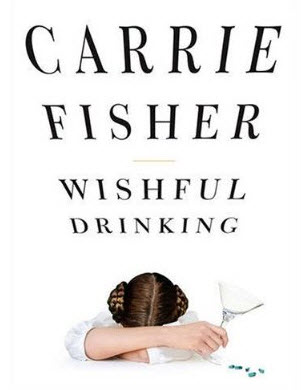
Cannonball Read #14: Wishful Drinking - Carrie Fisher


There's a saying in my family that goes "Never let the truth get in the way of a good story," and if anything, this might be the best way to encapsulate Carrie Fisher's autobiography, Wishful Drinking. It may seem paradoxical to wish that someone would stretch the truth in their own life story, but, well, it's a little more complicated than that.

You might recognize Carrie Fisher as Princess Leia from Star Wars, her stand up shows, or (If you happen to have a fetish for hairbuns and golden bikinis) your masturbatory fantasies. Admit it: If you grew up in the 70's, you totally fingerblasted yourself to Leia.

Anyway, in Wishful Drinking, Fisher delves into her past, retelling stories about gay men dying in her bed, Hollywood inbreeding, growing up on Broadway, becoming a Pez dispenser, marrying/divorcing Paul Simon, bipolarity and electroconvulsive therapy, getting an intervention from Cary Grant and, of course, Star Wars (and to a certain extent, why you cannot wear a bra in space, lest you be strangled by your undergarments.)

Now, it's not that any of these stories are boring, or that she's not a good writer (the fact that her book, Postcards From The Edge, was adapted into an Academy Award winning movie has proven this,) it's just that she doesn't really add much else to the story. It's a delicious dish without the spice; Perfectly good, but there's no added zest to it, nothing that really separates or distinguishes it from the others. I enjoyed it, yes, but I enjoy a lot of things; What makes it so special? Length is a bit of an issue to. There's nothing wrong with a quick read, but the short length of the book doesn't really give Fisher much time to establish much of a unique voice to her work.

Think of it this way: If you're going to spend a day at the beach and you need something to read and finish by the time you head home? You can't go wrong with some Carrie Fisher.

Monday, January 25, 2010

Cannonball Read Entry #13: John Dies At The End - David Wong


Easily one of the most frustrating books I've ever read, John Dies At The End is either the most brilliant or the most shitballs fucking stupid book I have ever read, although I'm not ruling out the possibility that it may be both. Whether it's a story that uses seemingly random and overtly sexual symbolism as a way to tap into darkest taboos of your subconscious or one long drunken clusterfuck of a dick-measuring story is entirely up to you, because quite frankly even I can't tell, and I READ the motherfucking thing.

The story begins with David Wong (Yup, that's also the name of the main character) and a group of other soon-to-be-very-fucking-dead twenty-somethings be infected by a mysterious black substance known as soy sauce, brought into a Rastafarian named Robert Marley. Yes, he actually has a Rastafarian character named Bob freaking Marley. Just roll with it. Eventually, people start dropping dead, which means he, the titular John, a couple other eventual corpses and Wong's love interest, Jennifer Lopez (...), go to Vegas to get to the bottom of it.

A year later, the soy sauce returns when it starts infecting people, driving them to full-on fucking murder people and generally just acting bananarama batshit insane. So of course, we go through it again. Another year passes, and David and John find themselves being watched through their TVs, and are forced to travel into another dimension filled with biotechnology to kill the being behind the soy sauce.

Despite being ridiculously funny, an innate ability to get under your skin, and being one of the few legitimately scary novels I've ever read, part of me couldn't help but feel like I just paid good money for what is essentially a really good drunken bar story. Between the numerous characters named after celebrities, the fact that the author is the main character of his own book and the sheer fucking absurdity of the book, the entire affair just borders on masturbatory fantasy.

Even worse, the three stories are barely even connected at all. Aside from a few tenuous strands holding it together, the stories really have very little, if anything, holding it together. Hell, even the writing style seems to change with each story, and the overall plot just wraps things up with a series of loose ends.

As comedy, John Dies At The End is hysterically funny. As something to scare you, it succeeds whole-heartedly to freak the shit out of you. But as a collective work of fiction, it just feels sloppy. It's just so loosely tied together that everything good and unique about it just got buried in my own frustrations with it.

Monday, January 11, 2010

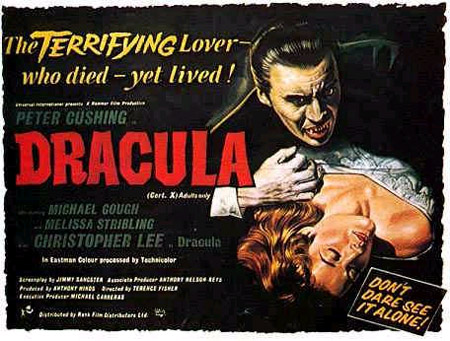
Cannonball Read Entry #12: Dracula - Bram Stoker


I regard classic literature the same way I regard women: Sure, I can appreciate their beauty and understand why people like them, but ultimately, I just don't really swing that way. It's not that I don't like the classics; Really, I do, they're just peachy keen. They're the bee's knees, the cat's pajamas, the gerbil's sensible high-heel shoes...But they just don't really DO anything for me.

Despite this, I would be lying if I said I didn't enjoy Dracula. The original vampire. Edward Cullen and Bill Compton couldn't even suck his dick. Even Buffy Summers herself, the motherfucking chosen one, would have to give her respects to the guy.

The plot takes place a long fucking time ago (because of fucking course it does) in Europe where Jonathan Harker is called to Dracula's castle for some estate business. He quickly realizes that something is severely fucked in that bitch, what with Dracula's propensity for climbing along the castle walls upside down, his three necromantic concubines and the fact that he's been taken prisoner.

Dontcha hate when that happens?

The story progresses from there as we trace the rise and fall of Dracula through interconnected diary entries, newspaper articles, letters, hasty scriblings, stickfigure drawings (Okay, maybe not stickfigure drawings), et cetera. A true test of an authour's writing ability is how accessible their prose remains over time, and considering the story is well over 100 years old, I'm honestly surprised at how well it translated into modern times.

That being said, the problem with most classics is that they've become so engrained in the public's psyche that you can pretty much see every plot twist from space. Think about it: How much better would The Sixth Sense have been if you didn't know Bruce Willis was a ghost? Exactly. The result is that nothing really seems all that surprising, and you realize just how thick Stoker laid on the foreshadowing; Listening to Harker talking about going to Dracula's castle and dinner is akin to listening to someone talk about going over to Hitler's for a delightful brunch.

While I may not be in love with Dracula, I still loved it. It's an incredibly well-written book, it has a surprising bit of dry wit added in here and there, and if you can move past its all-too-familiar plot, it's still a pretty gripping novel for one that was written before your grandparents were even born.